



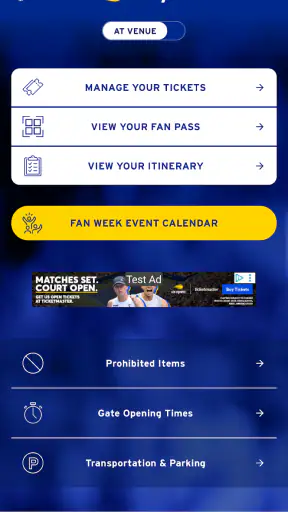
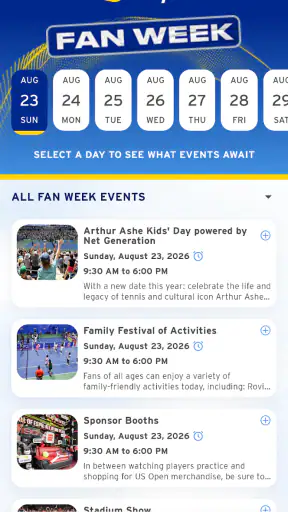


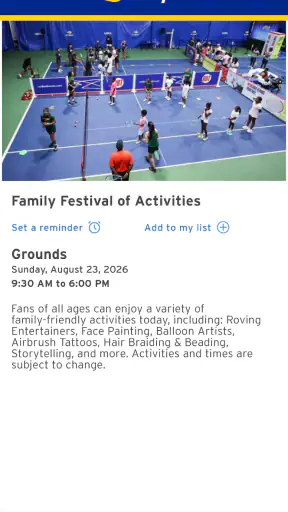


Following the US Open is much easier when the information you need is gathered in one place, and that is the main reason I kept coming back to US Open Tennis Championships. This free sports app from the United States Tennis Association is built around the 2026 US Open Tennis Championships, with the straightforward store description “US Open Tennis.” I found it most useful as a companion for checking the tournament while moving through a normal day rather than as a substitute for watching matches.
The app has been available since Aug 25, 2011, so it feels like an established part of the USTA’s mobile presence rather than a temporary event download. Its current version is 16.9.2083, it supports minimum OS 9, and it carries an Everyone age rating. The audience is broad: a casual fan can open it for a quick update, while a committed follower can build a repeatable routine around checking the competition.
How I used it during a normal tournament day
My baseline workflow was deliberately simple. I opened the app before the day became busy, looked for the most relevant tournament information, and then returned when I had a few spare minutes. That approach suits the app better than treating it like a full tennis broadcast platform. Its value is in helping me stay oriented: what is happening, which part of the event deserves attention, and whether I need to find a longer source for live viewing or deeper analysis.
A realistic use case is a workday when I cannot watch every match. I might check the app during breakfast, glance at it during a break, and use it again before deciding what to watch later. Those short visits are more practical than leaving a video stream running in the background. I also found that opening it before a match helped me avoid relying on scattered searches, especially when I wanted a quick tournament-specific update rather than general tennis news.
The app is especially approachable for someone who follows the US Open only during the event. The focus is narrow enough that I do not have to sort through unrelated sports, and the interface is easier to understand when my goal is simply to catch up. That focus is also its first important trade-off: if I want a broad tennis hub covering many tournaments throughout the year, a general tennis app may be a better everyday choice.
I would not install it expecting a complete replacement for television coverage, a dedicated streaming service, or a detailed tennis statistics platform. I used it as the information layer around my viewing habits. That distinction matters because it leads to a much better experience: check the app for orientation, then move to the appropriate viewing or analysis tool when the match itself is the priority.
What makes the focused design useful
The strongest quality here is concentration. A tournament-specific app can reduce the mental effort involved in finding the event you care about. Instead of opening a broad sports application and navigating through several leagues or competitions, I could start with the US Open context already in mind. For a fan who wants quick access during the tournament, that is a meaningful convenience even when the individual screens are not especially elaborate.
I also liked the way the app supports different levels of attention. A casual visitor can make a brief check and leave, while a more engaged fan can return repeatedly as the day develops. This makes it suitable for people who follow selected players or only certain stages of the competition. It is less compelling for somebody who wants to spend hours exploring historical records, player biographies, or a large statistical database.
One practical habit is to decide what I am checking before opening it. If I want a broad update, I scan the main tournament information. If I am following a particular match, I look for the relevant competition details first instead of wandering through every available section. That small change makes the app feel faster and prevents a short check from turning into an unfocused browse.
Settings and repeatable habits that improve the experience
I recommend spending a moment reviewing the app’s available settings and device-level notification controls before relying on it during the tournament. I do not treat every alert as equally important. If notifications are available for the information I care about, I prefer keeping only the most useful categories active and muting anything that would interrupt me too often. The exact choices can vary by device and app version, so I would check the current controls rather than assume every phone presents them identically.
This is one of the more important differences between a casual installation and a useful routine. An app can be free and easy to install, but its value drops quickly if alerts become noisy. I would begin with conservative notification choices, use the app for a day, and then adjust. That approach is better than enabling everything immediately and later disabling notifications altogether.
Another helpful setting-related habit is checking how the app behaves on your phone before an important match. Confirm that the application opens comfortably, that text is readable, and that your device is running a supported operating system. The minimum OS requirement is 9, which gives the app a relatively broad compatibility range, but an older device may still feel slower than a newer one. I would test it at home rather than discovering a problem when I am away from a reliable connection.
Because this is a tournament companion, I also keep a distinction between information I want pushed to me and information I am happy to request manually. Match-related developments may justify an alert for a dedicated follower, while general browsing can remain manual. This creates a calmer workflow and helps preserve the app’s role as a useful reference instead of turning it into a constant source of interruptions.
There is a second, less obvious benefit to this habit: it makes the app easier to share with family members who follow tennis casually. Rather than telling someone to search through a large sports app, I can suggest a focused tool and explain a simple routine—open it when they want a tournament update, then leave it closed when they are not following the action. That is a more realistic recommendation than assuming every fan wants continuous notifications.
Faster patterns for checking matches and tournament updates
Experienced use is mostly about repetition. I found it helpful to keep the app in a predictable place on my phone and open it at the same points in the day. A morning check gives me context, a midday check catches developments while I am busy, and an evening check helps me decide whether to watch anything in full. The routine is simple, but it prevents me from repeatedly searching the web for the same tournament information.
When I have only a few seconds, I avoid reading every item. I look first for the part of the app that answers my immediate question, then stop. This sounds obvious, but it is an effective way to use a focused sports app: the goal is not to consume every screen; it is to get the one piece of orientation needed at that moment.
I also recommend separating “what happened” from “what I want to watch.” The app can help me understand the tournament situation, but a viewing service or broadcast source may still be the right place for the actual match. Keeping those tasks separate makes the experience more efficient. I do not waste time looking for streaming controls in an app I installed primarily for tournament information, and I do not expect a video platform to provide the same focused event navigation.
For people following several players, a small note-taking habit can help. I might write down the matches I want to remember, then use the app to revisit the tournament context later. This is useful when a busy schedule prevents me from watching live. It also avoids repeatedly reopening the same screens simply because I forgot which match I meant to follow.
Another useful pattern is to check the app before discussing a match with someone else. That gives me a current tournament reference point and reduces the chance of relying on an old search result or a vague memory. I would still treat detailed commentary and technical analysis as separate needs, but for a quick conversation about the event, the focused format is convenient.
Where the app fits beside other tennis tools
Compared with a general sports application, this app has a clearer identity during the US Open. A broad sports app may be better for following football, basketball, tennis, and other competitions in one place, but it can also make a single tournament harder to find. I prefer the USTA app when the US Open is the main thing I care about and I want a dedicated starting point.
Compared with a tennis-results service, the choice depends on depth. A specialist results platform may be preferable for users who want extensive tours, historical data, rankings, and detailed match statistics across the season. I would choose this app instead when the event itself is the priority and I want a more direct tournament experience rather than a large tennis database.
Compared with a streaming application, the difference is even clearer. Streaming is the better option when my main goal is watching points unfold. This app is more useful before and around viewing: it helps me keep track of the competition and decide what deserves my attention. Using both types of service together makes more sense than asking either one to do the other’s job.
The USTA connection is also relevant. The developer is the United States Tennis Association, which gives the app a natural connection to the event it represents. I see that as a reason to try it for official tournament-focused information, but not as a guarantee that it will satisfy every advanced fan. A user interested in independent analysis, unusual statistics, or broad international coverage may still prefer another source alongside it.
Limits that become clearer with regular use
The narrow focus is helpful during the US Open, but it can make the app feel seasonal. If my tennis interest continues throughout the year, I would probably keep a broader tennis resource installed as well. This app makes the most sense when the tournament is active or when I specifically want a USTA-centered event companion.
I also would not recommend it to someone who wants every possible layer of tennis information in one place. Advanced followers may look for deep statistical breakdowns, long-term player comparisons, extensive historical archives, or coverage beyond this particular event. Those needs call for specialized tools. Installing this app will not remove the need for them.
There is a practical limitation in relying on any mobile tournament companion while traveling or moving between weak connections. I prefer to open it when I have a stable connection, especially before leaving home, rather than assume every detail will always be available instantly. That is not a criticism unique to this app; it is simply a sensible habit for live-event information.
The app is free, which lowers the barrier to trying it, but free access does not mean it is automatically the right choice for every fan. Someone who watches the US Open through an existing television or streaming package and already receives all the updates they need may find the extra installation unnecessary. I would add it when I want a more focused event reference, not just because it is available without a purchase.
Its Everyone rating makes it suitable for a wide household audience. That is convenient if several people share an interest in the tournament, although younger users may still benefit from an adult explaining how to interpret match information and notifications. The rating describes accessibility, not the depth of the content, so the app can be easy for children to open while still being most valuable to someone who understands the basics of tennis competition.
Who should install it, and who should skip it
I would recommend it to a casual US Open follower who wants a dedicated place to check the event without committing to a large sports platform. It is also a good fit for fans who follow selected matches around work, school, commuting, or family responsibilities. The repeatable check-in workflow is its biggest everyday strength.
It is a sensible choice for someone who already watches matches elsewhere but wants a separate tournament companion. In that setup, the app does not need to provide everything. It only needs to make the surrounding information easier to reach, and that is where I found it most comfortable.
I would skip it if my main requirement is year-round tennis coverage, exhaustive statistics, or live video as the central feature. A general sports app, a dedicated tennis-results service, or a streaming platform may serve those goals better. I would also skip it if I already have a trusted workflow that gives me the same tournament information with fewer steps.
The app has a strong audience fit, but not universal fit. That is a positive sign in my view: it knows what it is for. The mistake would be judging it as though it were meant to replace every other tennis tool.
My verdict after building a routine around it
With an average rating of 4.4 from around fourteen thousand ratings and more than a million installs, the app has clearly found a substantial audience. Those figures do not decide my opinion, but they match my experience of a mature, focused sports application that is easy to understand and useful when the US Open is the event I want to follow.
My recommendation is straightforward: install it if you want a free, USTA-developed companion for the 2026 US Open Tennis Championships, especially if your day requires short, repeatable checks rather than uninterrupted viewing. Review the notification controls, create a simple morning-and-evening routine, and use a separate service when you need full match coverage or deeper analysis.
The best way to use this app is as a focused tournament dashboard, not as an all-purpose tennis replacement. Once I accepted that role, its strengths became clearer. It helped me stay connected to the event without demanding constant attention, and it gave casual viewing a more organized structure. For a dedicated US Open follower, that is enough to make it worth keeping nearby during the tournament.


